


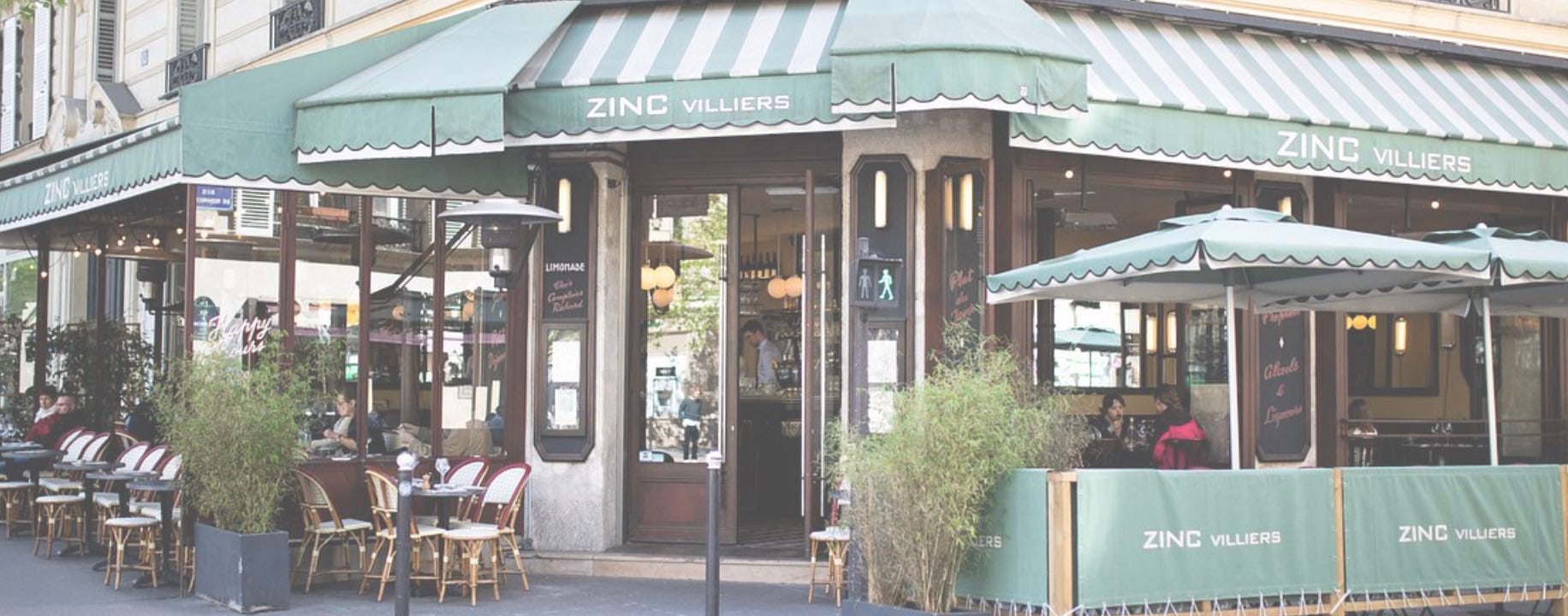
Walk into almost any old Paris café and you’ll notice the counter gleams with a dull silver sheen. That’s zinc — and it’s been the social dividing line of French daily life for nearly two centuries.
The zinc counter replaced pewter and wood surfaces in Parisian cafés during the mid-19th century, spreading rapidly through the city as Baron Haussmann’s grand rebuilding created new neighborhoods — and thirsty workers to populate them. Zinc was practical: easy to wipe down, resistant to the acids in wine and coffee, and cheap enough for a neighborhood bar.
But the zinc also became something more than a counter. It’s where Paris’s price democracy lives.
French law requires cafés to post two sets of prices: prix comptoir — what you pay standing at the bar — and prix salle or prix terrasse for seated service. The difference is often 30 to 50 percent. A petit noir that costs €1.80 at the zinc might run €3.50 at a sidewalk table.
The reason is straightforward: table service requires a waiter’s time. Standing at the zinc, you’re essentially self-service. Generations of Parisian workers knocked back their morning coffee standing, then headed to the Métro.
The tradition is fading. Authentic old zinc bars, with their mirrored backbars and brass footrails, are classified now as part of Paris’s intangible heritage.
Thanks for reading
John Pearce
Washington