


This Day in WWII | Tuesday, June 2 | Part-Time Parisian
On the morning of June 22, 1941, at precisely 3:15 a.m., German artillery opened fire along an 1,800-mile front stretching from the Baltic to the Black Sea. Minutes later, Luftwaffe bombers crossed into Soviet airspace and destroyed nearly forty percent of Stalin’s front-line aircraft before most of the pilots had reached their planes.
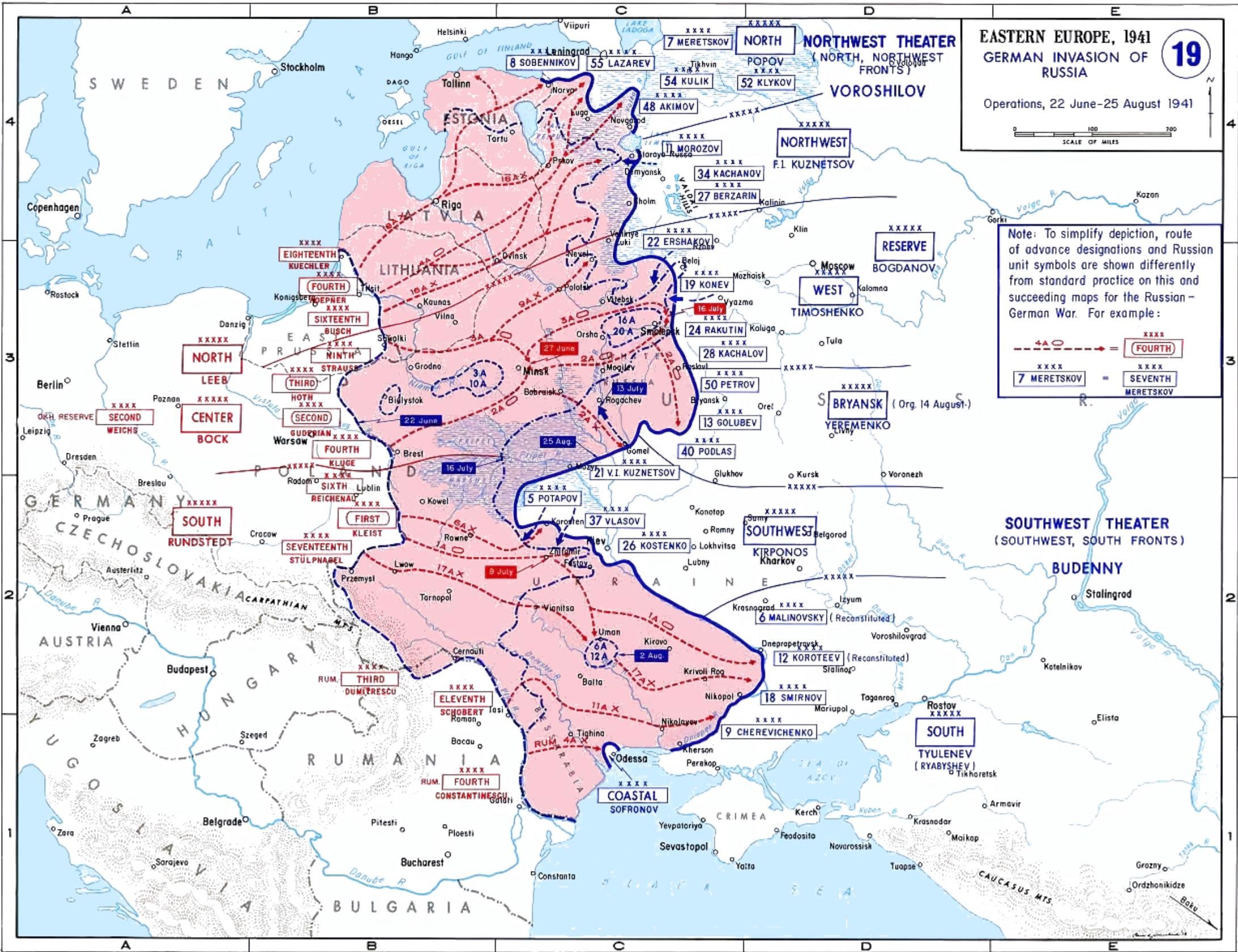
The non-aggression pact Hitler had signed with Stalin less than two years earlier — the deal that had stunned the world and let both dictators carve up Eastern Europe like a Christmas goose — died in the dark that morning, not with a diplomatic note but with the sound of guns.
June 1941 was the month the war became a world war. And it happened in stages, almost in plain sight. This post is an overview, to be followed by weekly details.
The Compact and Its Pretense
The Molotov-Ribbentrop Pact of August 1939 was never what it appeared to be. Hitler had always regarded it as a tactical maneuver — a way to fight on one front at a time. For nearly two years the arrangement held, each side devouring its neighbors while avoiding collision with the other. Stalin shipped grain and raw materials to Germany. Germany shipped machine tools to the Soviet Union. Both men understood the partnership would eventually collapse. Neither man, apparently, believed it would collapse first.
By early June, the warning signs were everywhere. British intelligence passed word to Moscow. American diplomats reported German troop concentrations along the Soviet border. Stalin’s own intelligence services rang the alarm. He dismissed all of it as provocation — a Western plot to drag the Soviet Union into a war it wasn’t ready to fight. He was convinced that the German military buildup was a negotiating tactic.
He was wrong in a way that nearly destroyed his country.
Meanwhile, in Washington
While Stalin’s blind spot widened, Franklin Roosevelt was drawing his own line. On June 14 — eight days before the guns opened in the East — Roosevelt signed an executive order freezing all German and Italian assets in the United States. Two days later, he ordered the withdrawal of German and Italian consular staffs, giving them until July 10 to go.
The order was blunt. It accused Axis consular establishments of engaging in activities “wholly outside the scope of their legitimate duties.” For a country officially at peace, it was a remarkable statement. Everyone in Washington knew what it meant.
Roosevelt wasn’t at war. He was getting ready.
And Over France
Closer to Paris, the RAF was already fighting. Spitfires and Hurricanes had been running offensive sweeps over northern France since late 1940 — operations with names like Rhubarb and Circus, hitting airfields, rail lines, coastal shipping. The results were mixed, the losses real. Some 300 RAF pilots would be lost in the summer offensive alone.
When Barbarossa began on June 22, the RAF intensified the campaign deliberately, trying to tie down as many Luftwaffe fighters in France as possible, to keep them from being transferred east. About ninety major sweeps ran through the summer, mostly between Rouen and Lille. From the streets of occupied Paris, residents could sometimes see the contrails.
Liberation was three years away. But the battle for France was already being fought in the sky.
3:15 a.m., June 22
Operation Barbarossa was the largest military operation in human history. Nearly 3.7 million German and Axis troops — 80 percent of the entire Wehrmacht — poured across the Soviet frontier in three army groups aimed at Leningrad, Moscow, and Ukraine. They were supported by more than 3,300 tanks and nearly 3,000 aircraft. Facing them: a Red Army of some 5.5 million men, caught flat-footed, its communications disrupted, its leadership paralyzed.
In the first hours, the Soviets lost nearly half their western air force. In the first months, they lost more than 800,000 dead, 3 million wounded, and 3.3 million captured. The numbers are almost impossible to absorb.
Stalin, by several accounts, had a breakdown. When a delegation of party officials arrived at his dacha in the early days seeking guidance, he reportedly cowered — apparently convinced they had come to arrest him for his catastrophic failure to heed the warnings. The man of steel had turned to water.
But the Soviets did not collapse. They mobilized. Within the first eight days after the invasion, 5.3 million people were called up — doubling the size of the Red Army almost overnight. Factories were dismantled and shipped east, beyond the Urals, out of German reach. The industrial infrastructure of an entire nation packed itself onto trains and moved.
Three Years to the Month
Three years later — almost to the day — 156,000 Allied troops would land on the beaches of Normandy. The Eastern Front that Barbarossa opened would consume most of Germany’s military capacity for the next four years, grinding down the Wehrmacht division by division in a war of attrition no Western army could have survived. By June 1944, the Germans were fighting a two-front war they had already lost.
Barbarossa made D-Day possible. Hitler didn’t know it when he gave the order.
What It Means Now
The German attack on the Soviet Union transformed the war. It turned a de facto German partner into the Allies’ indispensable eastern anvil. It opened the Holocaust’s most murderous phase — German forces and their allies carried systematic mass murder across Soviet territory behind the advancing front. And it set in motion the destruction of the Wehrmacht, which would not be complete until Soviet soldiers planted a flag on the Reichstag in May 1945.
June 1941 was eight days of quiet maneuvering in Washington, Spitfires over Rouen, and then, on the twenty-second, the guns. Everything that followed — Stalingrad, Kursk, Normandy, Berlin — traces back to that 3:15 a.m. artillery barrage along an 1,800-mile line.
The pact was a lie from the start. In the end, both men knew it.
Thanks for reading
John Pearce
Washington
The Name
Operation Barbarossa was named after Frederick Barbarossa — “Red Beard” — the 12th-century Holy Roman Emperor who led the Third Crusade and drowned crossing a river in what is now Turkey before reaching his destination. A famous conqueror who never arrived.
Hitler’s staff chose the name. The irony was apparently lost on them.

Again, fascinating material recounted by a pro. Demonstrates the perfidy and incompetence--and the utter lack of concern for human life -- of Stalin and the Soviets. They haven't changed an iota. They lie, scheme, massacre and roll onward, heedless of the deaths and suffering in Ukraine and elsewhere. Never, ever believe or trust a Russian! Brute force is the only thing they understand and respond to.