


This Day in WWII | June 1941 | Part-Time Parisian
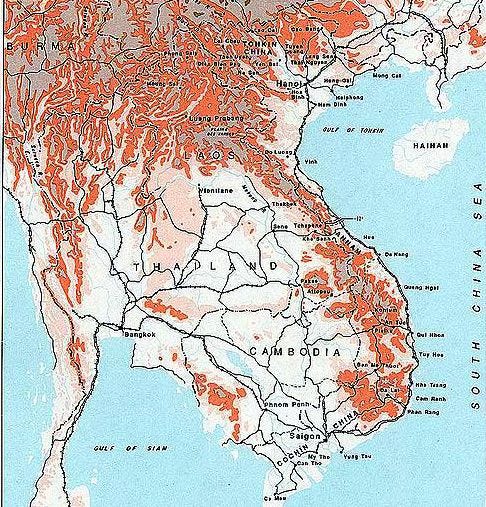
On June 22, 1941, Germany invaded the Soviet Union. Six days later, in Tokyo, Japan’s high command made a decision that would eventually kill hundreds of thousands and pull the United States into a war it wasn’t yet fighting. The two events were not coincidental. They were the same earthquake — felt simultaneously in occupied Paris and the colonial cafés of Saigon.
The Squeeze
For more than a year, Washington had been tightening a vise around Japan. Concerned by Japanese expansion, the United States had begun putting embargoes on exports of steel and oil to Japan from July 1940. Japan needed the rubber, tin, and oil of Southeast Asia to survive economically and continue its war in China. The obstacle was French Indochina — modern Vietnam, Laos, and Cambodia — still nominally under French control, governed from the colonial capital of Saigon.
After the fall of France in June 1940, the French Indochinese government had remained loyal to Vichy, which collaborated with the Axis powers. Japanese forces had already taken control of northern Indochina in September 1940. The south — with its ports, airfields, and proximity to British Malaya and the Dutch East Indies — remained. Japan wanted it badly. What Tokyo lacked was the right moment.
Barbarossa provided it.
The Pivot
Within the Japanese high command, there had been an ongoing disagreement over what to do about the Soviet threat to the north of their Manchurian territories. The tipping point came just after the German invasion of the Soviet Union in late June 1941. With the Soviets now tied down fighting Germany, the high command concluded that a “strike south” strategy would solve Japan’s most pressing problems — most notably the increasing American concerns about Japan’s moves in China, and the possibility of a crippling oil embargo.
By June 28, the internal decision was made. On July 15, Japanese authorities presented Vichy France with demands for airfields, naval bases, and troop stations in southern French Indochina, targeting Saigon and Cam Ranh Bay to support advances toward British Malaya and the Dutch East Indies.
The man who had to answer that ultimatum was Admiral Jean Decoux, Governor-General of French Indochina. He became governor-general on July 20, 1940, soon after France’s capitulation to Germany, and within two weeks had already received Japanese demands for permission to move troops through northern Vietnam and use Indochinese air bases. Now, a year later, Tokyo wanted the whole colony. Although the Japanese allowed Decoux and his French administration to remain in nominal control of mundane affairs, he was not permitted to do anything that conflicted with their interests. He cabled Vichy for help. None came.
Paradise on Borrowed Time
The French in Indochina that summer occupied a strange bubble. Those arriving from metropolitan France in early 1941 described Indochina as a paradise. They had left a country under harsh German occupation, experiencing desperate shortages and a brutal winter. In Saigon, they could finally eat well, drink Pernod, buy tobacco, ride in taxis.
That bubble was about to burst. Vichy Governor-General Decoux, facing Japanese ultimatums and pressure transmitted from the German-occupied metropole, negotiated under duress with General Issaku Nishihara, leading to a Franco-Japanese joint defense agreement signed in late July 1941, permitting the deployment of approximately 35,000 Japanese troops to the region alongside control over strategic facilities. In practice, the Japanese sent far more. Some 140,000 Japanese troops invaded southern French Indochina, with French troops and the civil administration allowed to remain, albeit under Japanese supervision.
The French colonial authorities knew they could not win against the Japanese by force. So they stayed, served, and told themselves it was the least bad option.
Roosevelt Responds
Washington had been watching through intercepted diplomatic cables. On July 25, 1941, Japan declared French Indochina a Japanese protectorate. Roosevelt retaliated by freezing $130 million in Japanese assets in the United States and banning oil exports to Japan. Britain and the Netherlands followed. A Japanese foreign ministry message intercepted shortly after accused the United States of acting like “a cunning dragon seemingly asleep.” Pearl Harbor was now five months away.
The chain of causation was already locked in. Japan needed oil. The embargo blocked it. Southern Indochina gave Japan the bases it needed to seize the Dutch East Indies oilfields by force. The occupation of Saigon, in other words, was not a sideshow to the Pacific War. It was the first move.
The Long Shadow
The consequences reached further than anyone in Tokyo or Washington anticipated. The decisions made by Vichy France, Japan, and the Indochinese Communist Party in 1941 founded the institutions and relationships that would define the following years. In the mountains of northern Vietnam that same summer, a meeting presided over by a man known as Nguyen Ai Quoc — later Ho Chi Minh — formalized the Viet Minh as the primary front for Vietnamese national resistance. The war that would eventually claim 58,000 American lives was already finding its shape.
Decoux’s own reforms, designed to undermine Japanese influence and improve relations between French colonists and the Vietnamese people, unwittingly helped lay the groundwork for Vietnamese nationalist resistance to French rule after the war. History’s ironies rarely announce themselves.
Paris, That Same Week
Three thousand miles away, in occupied Paris, a different consequence of Barbarossa was also taking shape. From the signing of the Molotov-Ribbentrop Pact in August 1939 until June 1941, the French Communist Party had played no active part in the Resistance. After Operation Barbarossa on June 22, 1941, communists became among the most active and best-organized forces against the Germans. The same event that unlocked Japan’s southern strategy was rebuilding the Resistance networks that would matter in 1944.
In an upcoming Eddie Grant novel, Artie Grant — an American businessman who stayed behind in Paris at the personal request of FDR — is watching exactly this transformation in the summer of 1941. One earthquake. Two theaters. The man in Paris and the admiral in Saigon are both living inside the same week’s news, neither knowing quite where it ends.
By the Numbers
140,000 — Japanese troops deployed to southern Indochina, nearly four times what Decoux had agreed to
$130 million — Japanese assets frozen by Roosevelt in immediate retaliation
5 months — time between the Saigon occupation and Pearl Harbor
~2 million — Vietnamese deaths from famine during the Japanese occupation, 1944–45
1946 — year the First Indochina War began, a direct consequence of the colonial vacuum Japan created
John Pearce is the author of Treasure of Saint-Lazare and the Eddie Grant Saga, set in Paris. Subscribe to Part-Time Parisian for weekly dispatches on France, history, and the city that keeps showing up in the middle of everything.
Concatenations have infinite and unpredictable consequences. Thanks for another great piece.